

About this Presentation
In 2020, SpaceX successfully launched the first manned mission of the brand new Dragon 2 spacecraft. For the mission control teams, the "Demo-2" mission was the culmination of years of preparation and training. When the goal of flying 8 mission per year was set, it became clear that a paradigm shift was required in how training was conducted. While TOC proscribes a foundation for optimizing a system, the engineers at SpaceX are challenged to go much farther than that. We'll look at how the Theory of Constraints applied to optimizing the execution of complex, costly training events. Then we'll look at how integrating TOC within Elon Musk's Algorithm exposes the perils of premature optimization.
What Will You Learn
To help you get the most value from this session, we’ve highlighted a few key points. These takeaways capture the main ideas and practical insights from the presentation, making it easier for you to review, reflect, and apply what you’ve learned.
The session reveals why optimization without elimination often locks organizations into unnecessary complexity, consuming time and resources without improving outcomes.
It shows how questioning requirements and deleting work—before applying TOC—exposed the true constraint in SpaceX’s training system.
The presentation hints at how combining the Five Focusing Steps with Musk’s algorithm enabled dramatic reductions in simulation count, training duration, and manpower without sacrificing safety.
It illustrates how high-trust cultures use clarity, prioritization, and visibility to scale performance faster than command-and-control optimization ever could.
Instructor(s)
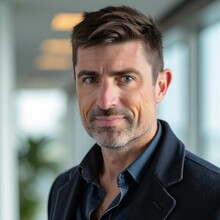
Jeff Stanek
After 12 years as a United States Air Force officer and C-130 Instructor Navigator, Jeff shifted gears into working on small, aggressive problem solving teams in multiple startups and SaaS companies. In 2019 he was hired at SpaceX to train mission control teams to fly the Dragon spacecraft. As a Dragon Mission Director, Jeff was the final authority for safe operation of missions that included re-supplying the International Space Station and the first all-civilian commercial EVA. He is currently a consultant specializing in management, operations, and leadership for companies that want to realize the simplicity, speed, and transparency of the great teams he has been a part of. He holds a Bachelor of Science in Professional Aeronautics from Embry-Riddle Aeronautical University, and a Bachelor of Science in Mechanical Engineering from the University of Colorado Denver.