

About this Presentation
Vivek Bhatia, Sanjay Ghosal and Nikhil Gilani present TKIL Industries' Theory of Constraints transformation in a large industrial engineering and EPC business. From FY18 through FY24, TKIL had roughly doubled sales and profit, but cash had not grown at the same pace. The transformation therefore began with a deliberate reframe: blocked cash was treated as a symptom of organizational problems rather than only a finance issue, and cash became a visible enterprise goal shared across projects, procurement, manufacturing, engineering, quality and finance. Throughput (T), Investment (I), Operating Expense (OE), OTIF and delayed orders created a common language for managing the whole business.
The implementation combined leadership alignment, TOC and CCPM education, a weekly management system and focused bottleneck work. Instead of relying on a monthly reporting ritual, TKIL established a weekly execution cadence. The deck reports 50 of 52 weekly reviews held in FY26, more than 100 weeks of operational data maintained as a single source of truth, and weekly targets and corrective actions across all functions. Reviews were reinforced by daily and weekly task-force huddles, variance analysis and explicit ownership of corrective action.
Engineering was identified as the bottleneck. The team focused on exploiting and protecting it rather than attacking every part of the organization at once. Engineering OTIF improved from below 20% to above 60% after 18 months. More than 800 team members were trained in project-management principles, and the organization used simple purpose-built digital tools for daily task tracking, purchase-request/purchase-order/material-receipt OTIF, and manufacturing sequencing and raw-material full-kit visibility. The message is that digital tools should support the bottleneck and execution system, not become the transformation themselves.
The reported 18-month results show cash, growth and operating performance improving together. From FY24-25 to FY25-26, cash in bank increased 51% from $72 million to $109 million, sales increased 19% from $338 million to $404 million, and the deck reports PBT up 34% excluding specified one-off exceptional items. Overdue receivables fell 23%, inventories fell 21%, delayed orders fell 48% from $90 million to $46 million, gross working-capital turns improved 27% from 1.78 to 2.25, net working-capital turns improved 38% from 2.77 to 3.81, and Throughput increased 26% from $78 million to $99 million; $5 million of vendor overdue was eliminated. Beyond the measures, leaders describe a shift from functional performance to whole-business ownership, monthly reporting to weekly execution, blame to cross-team coordination, and departmental objectives to enterprise outcomes.
What Will You Learn
To help you get the most value from this session, we’ve highlighted a few key points. These takeaways capture the main ideas and practical insights from the presentation, making it easier for you to review, reflect, and apply what you’ve learned.
How TKIL reframed blocked cash as an organization-wide flow problem and aligned projects, procurement, manufacturing, engineering, quality and finance around one language of Throughput, Investment, Operating Expense, OTIF and delayed orders.
Why cadence mattered: 50 of 52 weekly reviews in FY26, more than 100 weeks of operational data, weekly targets, and daily/weekly huddles turned alignment into an execution habit rather than a monthly reporting event.
How identifying engineering as the bottleneck focused improvement: Engineering OTIF moved from below 20% to above 60% after 18 months, supported by full-kit, OTIF and daily-task tools and training for more than 800 people.
What the 18-month transformation delivered: cash +51% ($72M to $109M), sales +19% ($338M to $404M), reported PBT +34%, overdue receivables -23%, inventory -21%, delayed orders -48%, gross WC turns +27%, net WC turns +38%, and Throughput +26% - demonstrating that cash, profit and growth can improve together when the system manages the constraint.
Instructor(s)
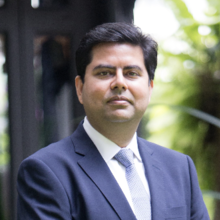
Vivek Bhatia
Vivek Bhatia is the Managing Director and CEO of TKIL Industries Pvt. Ltd. (formerly known as thyssenkrupp Industries India Pvt. Ltd.), a 78-year-old diversified industrial enterprise with a portfolio spanning equipment and plants for mining, material handling and mineral processing, cement, boilers and thermal power, green hydrogen, biochemicals—including compressed biogas (CBG), ethanol, polylactic acid (PLA), and sustainable aviation fuel (SAF)—sugar, and cogeneration. The company also operates a comprehensive service business focused on asset management and Operations and Maintenance (O&M).
The company was renamed TKIL Industries on July 16, 2024, following thyssenkrupp AG’s divestment of its stake in the company. Mr. Bhatia has been at the helm as Managing Director and CEO since January 1, 2019, and has played a pivotal role in driving the company’s growth and strategic initiatives in innovation, sustainability, and digitalization.
Under his leadership, TKIL Industries has grown faster than its industry peers, more than doubling its turnover within a short timeframe and achieving record levels of profitability and free cash flow year after year. The company has also expanded into new and emerging sectors, including green hydrogen and biochemicals, reinforcing its commitment to providing sustainable and forward-thinking industrial solutions.
In recent years, Mr. Bhatia has been recognized as India’s Greatest CEO 2025 by Asia One and as an Influential Leader and Change Maker by Marksman Daily in both 2022 and 2024.
Before assuming his current role, Mr. Bhatia served as CEO, Asia Pacific, for thyssenkrupp. Based in Singapore, he led the group’s businesses across the region, representing more than €2 billion in revenue and operations in approximately 19 countries.
At the age of 38, he became the youngest CEO to join the Top Leadership Team of thyssenkrupp AG, reporting directly to the Group CEO. Before becoming CEO, Asia Pacific, he served as Head of Strategy, Markets and Development for the Asia-Pacific region, also based in Singapore. Mr. Bhatia has held leadership roles across India and the Asia-Pacific region within thyssenkrupp since 2014.
Before joining thyssenkrupp, Mr. Bhatia worked with The Boston Consulting Group. At BCG, he advised a wide range of clients on topics involving capital goods, pharmaceuticals, telecommunications, and banking, with a focus on CEO- and board-mandated priorities.
In 2013, he received a BCG Olympics Gold Medal for the most insightful and impactful client work in the Asia region. The award recognized his leadership of a comprehensive turnaround that restored a complex global industrial business to profitability within six months.
Before joining BCG, Mr. Bhatia worked as a design engineer for refineries and pipelines at Engineers India Limited. In this role, he contributed to complex projects involving multiple areas of refinery operations and large cross-country pipelines.
In addition to his full-time role at TKIL Industries, Mr. Bhatia is a member of the National Council, the apex decision-making body of the Confederation of Indian Industry (CII). He has also served for several years as Chairman of CII’s Mining, Construction and Equipment Division.
He is a member of the FICCI Power Committee and the FICCI Bioenergy Committee. He also serves on the National Executive Committee, the apex decision-making body of the Indian Chamber of Commerce, and on the National Executive Committee of the Mahratta Chamber of Commerce, Industries and Agriculture.
Since 2020, Mr. Bhatia has served as a Non-Executive Independent Director on the board of GMM Pfaudler, a global company listed on the Indian stock exchanges. He also chairs the company’s Audit Committee and Risk Management Committee.
Mr. Bhatia has extensive business experience across multiple sectors, including building materials, mining, metals and mineral processing, oil and gas, renewable energy, power equipment—including production, transmission, and distribution—and engineered and capital goods.
He has worked extensively across a broad range of business areas, including strategy, operational improvement, organizational growth and diversification, joint ventures, post-merger integration, carve-outs, technology licensing and transfer, business transformation and turnaround, working capital management, operations design and reengineering, organizational design, and performance management systems.
He is a widely sought-after speaker on the infrastructure sector and has been extensively quoted across media outlets in India and internationally.
Mr. Bhatia holds a Post Graduate Diploma in Management, equivalent to an MBA, from the Indian Institute of Management Calcutta, where he focused on strategy and corporate finance. He also holds a Master of Technology in Energy and Environmental Management from the Indian Institute of Technology Delhi, where he was a gold medalist, and a Bachelor of Engineering with honors in Mechanical Engineering from the University of Delhi.

Sanjay Ghoshal
Sanjay Ghoshal is a recognized leader and practitioner in Project Management leveraging over three decades of consulting and industry experience. He has implemented Critical Chain Project Management and advanced Theory of Constraints (TOC) methodologies in both Indian and international organizations across diverse sectors.
Key Expertise and Project Experience
Sanjay has led successful Project Management implementations in some of the most complex and high-profile project environments, including:
• Large Indian EPC Company: Implemented CCPM to streamline project execution and cut lead times in large-scale industrial and engineering projects, delivering significant gains in schedule reliability and resource utilization.
• Leading Indian Real Estate Developer: Championed the adoption of Critical Chain principles in real estate projects, enabling faster completions and strengthening cross-functional collaboration.
• Greenfield Integrated Steel Plant (2.5 MTPA, India): Drove the application of CCPM across greenfield and brownfield steel plant projects, transforming execution performance and ensuring on-time delivery.
• Largest Social Housing Company in Mexico: Led the deployment of CCPM in large-scale residential construction, removing execution bottlenecks and enabling aggressive delivery timelines despite market challenges.
Broader Consulting Experience
Sanjay has worked hands-on with the pioneers of TOC—including direct collaboration with Dr. Eli Goldratt—to evolve pragmatic solutions tailored to different industry contexts. His client list includes Tata Steel, L&T, Dalmia Cements, Godrej & Boyce, BPCL, TKIL, Vedanta Steel (previously Electrosteel Steel), Godrej Properties, Homex (Mexico), Nicomed (Denmark), Dynegy (USA), and ARA (Mexico), Philips NV (Netherlands).
He brings extensive expertise in complementary areas of Project Management, including multi-project portfolio management, constraint identification, buffer management, and large-scale organizational change, across diverse sectors such as Engineering, EPC, Construction, Software, and Electrical Engineering.
Thought Leadership and Credentials
• Presented papers on CCPM and TOC at international TOCICO conferences.
• Contributed to the TOC body of knowledge with a focus on strategy execution, project acceleration, and resource optimization.
Sanjay holds a Mechanical Engineering degree from Nagpur University and post-graduate management qualifications from the Indian Institute of Management, Bangalore.
Sanjay continues to enable organizations to drive breakthrough performance in project-driven environments by embedding Critical Chain Project Management and TOC as pillars of strategic and operational transformation.
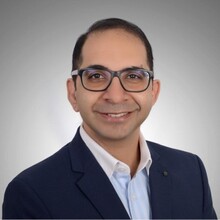
Nikhil Gilani
Nikhil is a TOC practitioner and trainer at Goldratt Bharat with 22 years of experience across the telecom, technology, and retail sectors. Prior to Goldratt Bharat, Nikhil was Co-Founder at EkAnek Networks and worked at Bharti Airtel in senior leadership roles, where he served as Senior Vice President in his last stint. During his time at Airtel, Nikhil led Business Planning, Pricing, and the 4G Launch.
He is an alumnus of the Indian School of Business (ISB), Hyderabad. Prior to studying at ISB, he was associated with BPL Mobile and Tata Communications, helping roll out India's first broadband network.
Nikhil has practiced TOC throughout his leadership roles in his current and previous organizations and is a regular participant at TOCICO conferences. He has played a pivotal role in the design and delivery of an ongoing TOC training program for Jindal Steel employees across all locations.