

About this Presentation
While CCPM effectively manages flow, it assumes the project team is already aligned, capable, and collaborative. In practice, the human side of projects is often the hidden constraint. Misaligned team composition, poor communication, and limited learning during execution can stall performance—regardless of how well the schedule is managed. This session introduces an evolved CCPM approach by integrating Doug Wilde’s Teamology, which builds cognitively diverse teams using Jungian typology, and embedding structured peer learning into project flow. This aligns with TOC’s core principle: focus on the real constraint to improve throughput. A proposed pilot will be shared, comparing a standard CCPM team with one using the A-Team framework: Teamology-informed team design, a co-created team charter, learning rituals such as feedback circles and “hotseats,” and psychological safety checks. The goal is not just faster delivery, but smarter, self-improving teams. Attendees will leave with a simple, replicable framework for building A-Teams: How to use typology to design better teams, How to embed learning rituals into project cycles, How to measure team functioning alongside buffer burn, How evolving CCPM in this way can dramatically boost project velocity and long-term team effectiveness
What Will You Learn
To help you get the most value from this session, we’ve highlighted a few key points. These takeaways capture the main ideas and practical insights from the presentation, making it easier for you to review, reflect, and apply what you’ve learned.
The session highlights how a team itself — its structure, workload, communication patterns, and norms — can act as a genuine system constraint that limits overall performance.
It shows that many organizations overlook team dynamics in favor of tools or metrics, even though constraint behavior often emerges from how people interact and prioritize work.
The presentation illustrates how identifying and addressing team-level constraints can improve flow, reduce rework, and increase predictability in execution.
It emphasizes that treating teams as dynamic system components — rather than static resources — enables more effective alignment of capacity, collaboration, and strategic objectives.
Instructor(s)
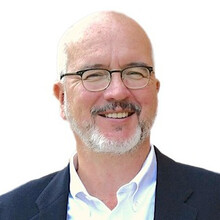
John van der Steur
John van der Steur is Senior Expert People Flow at Mobilé 4 Flow & Innovation, a leadership consultant, team strategist, and author of The Power of Polarities: An Innovative Method to Transform Individuals, Teams, and Organizations. Based on Carl Jung’s Theory of the Personality. With a background in Jungian psychology and decades of experience helping organizations build high-performance teams, John brings a unique lens to the intersection of human dynamics and operational excellence. His work bridges theory and practice, showing how psychological diversity, structured peer learning, and systems thinking can unlock extraordinary collaboration.