

About this Presentation
The Capable Human, authored by Louise Nobes and presented by Simon M White, uses Theory of Constraints Thinking Processes to examine a strategic education problem created by AI-driven workforce disruption. The starting concern is dual: WiseTech needs a durable pipeline of problem-solvers to protect future business viability, while people whose operational work is increasingly exposed to automation need a path into roles built on understanding and problem solving rather than routine execution.
The presentation works through three conflicts. The first asks whether to create a university or rely on the market and existing providers. The resolution is to act, because business viability and the obligation to people outweigh waiting. The second asks whether to build an institution or buy or partner with an existing one. After considering alignment, accreditation, teach-out time, cost, and execution risk, the proposed resolution is to build a digital, online-first university. The third conflict is harder: should TOC have a standalone degree that builds academic identity, or should TOC capability be embedded across every degree to maximize reach?
Rather than choose one side, the team challenges the assumptions underneath the conflict. A dedicated credential is not the only route to academic credibility; credibility can come from evidence, research, teaching, and scholarly recognition. Embedding TOC in every degree does not automatically create adoption; students and employers must value and reinforce the capability. The deck also states that there is strong demand for the capability but no evidence yet of demand for a “TOC graduate” credential.
This leads to a reframed goal: produce a capable human who can apply TOC-style problem solving immediately. The proposed model integrates three inseparable pillars — Academia, Research, and Practice. Academia supplies structured, accredited learning; research provides evidence, best practice, and an innovation loop; practice builds capability through repeated real problem solving. The resulting practitioner is defined as rehearsed, credible, evidenced, and generative. The case positions this model as an injection that resolves the degree-versus-embedded conflict without treating it as a compromise.
What Will You Learn
To help you get the most value from this session, we’ve highlighted a few key points. These takeaways capture the main ideas and practical insights from the presentation, making it easier for you to review, reflect, and apply what you’ve learned.
How TOC conflict-cloud logic can be used for strategic education decisions, including whether to create a university, build versus buy, and offer a standalone TOC degree versus embedding TOC across programs.
Why the deepest conflict is not resolved by choosing a side: testing the assumptions reveals that academic credibility does not require a dedicated credential and broad exposure does not automatically create adoption.
How the proposed “capable human” model integrates three inseparable pillars — Academia for structured credibility, Research for evidence and innovation, and Practice for repeated real-world problem solving.
What capability means in the model: a practitioner should be rehearsed, credible, evidenced, and generative — able to solve real problems immediately and feed field learning back into the innovation loop.
Instructor(s)

Simon White
Simon M White is Chair of TOCICO and a senior leader at WiseTech Global, where he works across enterprise delivery, organisational capability and education. Over a career spanning more than 30 years, he has led major projects and transformation initiatives across defence, logistics and technology in Australia, the United Kingdom, the United States and Saudi Arabia. Simon is a long-standing Theory of Constraints practitioner, speaker and advocate, with a particular interest in helping organisations see the system clearly, identify what is genuinely limiting performance, and improve flow. His work is grounded in a simple belief: capable people usually do not need fixing, but the systems around them often do.
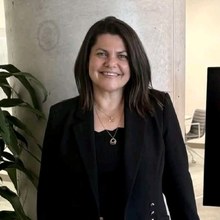
Louise Nobes
Louise Nobes is Head of Education at WiseTech Global and Founder and CEO of KIK Innovation. Her leadership is grounded in two decades of experience across social work, education and business, where she has designed peer‑led, merit‑based learning models that remove barriers and expand opportunities for young people. In 2015, she founded KIK Innovation, a not‑for‑profit dedicated to equitable access to education and employment. In 2021, she launched 42 Adelaide, the Australian campus of the global French founded coding school, providing tuition‑free degree level education, in a disruptive peer to peer pedagogical model replacing teachers and classrooms. In 2024, KIK Innovation acquired Grok Academy, a free digital education platform used by 4 million students globally.
Louise’s work has been recognised through awards such as the Winnovation Award for Social Impact and inclusion and InDaily’s 40 Under 40. She is also a graduate of the Australian Institute of Company Directors (GAICD)