

About this Presentation
Charath Narasimhan, Nikhil Gilani and Ira Gilani present the measurement system behind Indian Terrain Fashions' turnaround. Indian Terrain is a premium Western menswear brand in India operating across roughly 150-200 exclusive stores, 800-1,000 multi-brand outlets, more than 200 large-format outlets, six or more e-commerce channels and more than 250 cities. After the post-COVID revenue recovery, sales flattened while inventory continued to rise. Some locations had excess stock while others lacked best sellers, managers and franchisees guarded inventory, and the cash squeeze made further growth without additional capital increasingly difficult.
TOC education introduced a common management language around Throughput (T), Investment (I) and Operating Expense (OE) and reframed the goal as making more and more money. The central operating measure became I/(T-OE), where lower is better. Rather than asking channels only to grow sales, leaders were asked to improve capital productivity without increasing the inventories and receivables blocked in the system. Each channel was measured against its own prior 13-week moving average instead of being compared with other channels, while teams drilled into underperforming stores, counters, distributors and partners to decide whether to raise Throughput, reduce Investment or reduce channel-specific OE.
The measure was made visible through weekly dashboards and streaks, but the more important mechanism was management cadence. For more than 120 weeks, the Managing Director chaired weekly reviews with the senior leadership team covering organization-wide collections, Throughput, gross working capital/Investment, Operating Expense and overdues; each channel was then reviewed individually against its 13-week baseline, with gaps translated into corrective and preventive actions. The approach extended beyond finance into merchandise allocation, replenishment, credit policy, collections and frontline store management.
The mindset shift was from chasing scale to building a healthier business. Indian Terrain challenged assumptions about inventory quantity, introduced product-category min-max norms, exited EBO stores and LFO doors that were T-OE negative, enforced distributor credit limits, accelerated returns of unsold merchandise to free credit capacity and increased attention to collections. Leadership, functional teams and store managers were trained together so local decisions could be connected to T, I and OE and evaluated by their effect on the whole system.
The reported FY25-to-FY26 results show the combined effect: net sales increased from ₹3,408 million to ₹3,774 million, an increase of ₹366 million; profit before tax improved from a ₹414 million loss to a ₹27 million profit, a ₹441 million improvement; and gross working-capital days fell from 329 to 311, an 18-day reduction. The presenters conclude that revenue growth, profit and cash flow can improve together when the organization manages for system performance rather than local optimization.
What Will You Learn
To help you get the most value from this session, we’ve highlighted a few key points. These takeaways capture the main ideas and practical insights from the presentation, making it easier for you to review, reflect, and apply what you’ve learned.
How Indian Terrain reframed performance around Throughput, Investment and Operating Expense and used I/(T-OE) as a single capital-productivity measure, with each channel expected to improve against its own 13-week moving average.
How a disciplined weekly review cadence led by the Managing Director connected organization-wide measures, channel performance, gaps and corrective actions for more than 120 weeks.
How system-level measurement changed operating decisions in retail: inventory quality and min-max norms, store and door exits, merchandise allocation, replenishment, credit limits, returns and collections were managed for overall T, I and OE rather than local scale.
What the turnaround delivered from FY25 to FY26: net sales increased by ₹366 million, profit before tax improved by ₹441 million from loss to profit, and gross working-capital days fell by 18 - showing that growth, profitability and cash can improve together when local optimization is replaced by system alignment.
Instructor(s)
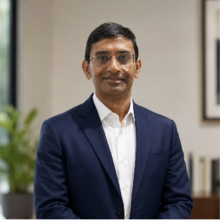
Charath Narasimhan
Charath Narasimhan is Managing Director of Indian Terrain Fashions Ltd (ITFL), a premium Western menswear brand in India. Nikhil Gilani and Ira Gilani are Directors of Goldratt Bharat. In this Summit session, the three presenters describe the management measurements, operating cadence and organization-wide TOC practices used in Indian Terrain's turnaround.
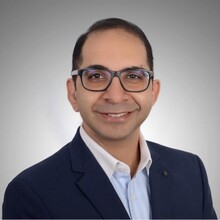
Nikhil Gilani
Nikhil is a TOC practitioner and trainer at Goldratt Bharat with 22 years of experience across the telecom, technology, and retail sectors. Prior to Goldratt Bharat, Nikhil was Co-Founder at EkAnek Networks and worked at Bharti Airtel in senior leadership roles, where he served as Senior Vice President in his last stint. During his time at Airtel, Nikhil led Business Planning, Pricing, and the 4G Launch.
He is an alumnus of the Indian School of Business (ISB), Hyderabad. Prior to studying at ISB, he was associated with BPL Mobile and Tata Communications, helping roll out India's first broadband network.
Nikhil has practiced TOC throughout his leadership roles in his current and previous organizations and is a regular participant at TOCICO conferences. He has played a pivotal role in the design and delivery of an ongoing TOC training program for Jindal Steel employees across all locations.
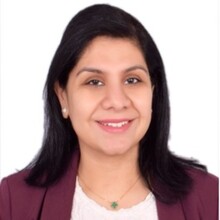
Ira Gilani
Ira Gilani is a management consultant with 21 years of experience across the pharmaceuticals, apparel, aerospace, metals and mining, automotive, and retail sectors. Prior to her role as Director at Goldratt Bharat, Ira was a Consultant at Accenture Strategy. At Accenture, she worked extensively with Indian as well as global clients. Ira holds an MBA from IIFT, New Delhi.
She has conducted in-house workshops at organizations such as Sanofi, Flipkart, NTPC, Tata Group, Airtel, Mahindra & Mahindra, Jindal Steel, Hindustan Zinc, CII, FICCI, and many others.
She is also a guest faculty member at SP Jain Business School. She regularly engages in and conducts knowledge-sharing sessions for industry bodies and students and alumni of premier Indian institutions such as ISB and IIT.