

About this Presentation
Derek Hudson uses the familiar TOC question "Which one is Herbie?" to make a larger point about perspective: when people are immersed in a system, they may not be able to see the system as a whole. The TOCx talk deliberately avoids a long technical explanation and instead offers a compact framework for gaining system sight. Hudson identifies three requirements for seeing the system more clearly: distance, a guide, and a framework. Distance creates separation from the immediate activity and local pressures. A guide provides another perspective while the observer is trying to understand what is happening. A framework gives structure to what must be examined rather than leaving the observer to rely only on what is most visible from inside the work. The framework itself has three essential elements: Purpose, Path, and People. Purpose asks what the system exists to achieve. Path directs attention to how work or value moves toward that purpose. People keeps the human actors and relationships that operate the system in view. Hudson's final point is that a complete view needs all three. The session is therefore a concise reminder that identifying a constraint or improving flow requires more than looking harder at the activity immediately in front of us; practitioners need enough perspective and structure to see the whole.
What Will You Learn
To help you get the most value from this session, we’ve highlighted a few key points. These takeaways capture the main ideas and practical insights from the presentation, making it easier for you to review, reflect, and apply what you’ve learned.
Why being immersed in daily work can make the system itself difficult to see, even when people understand their own tasks and local problems very well.
Why creating distance from the immediate work can improve system sight by reducing the pull of local detail and local urgency.
How a guide and a framework can provide additional perspective and structure when trying to understand a system from outside the assumptions of the people operating it.
How the Purpose-Path-People framework keeps the goal, the route through the system, and the human participants in one view - because a complete system perspective needs all three.
Instructor(s)
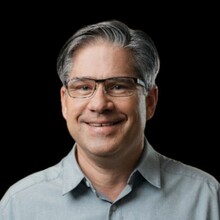
Derek Hudson
Derek Hudson is the founder of Unconstrained and the creator of Essential Dynamics, a framework for helping leaders see and improve complex human systems. He has served as a consultant, CFO, COO, and CEO, and has spent his career focused on how systems achieve flow.
He has been a student of the Theory of Constraints since reading The Goal the same week he was unexpectedly called to lead a group of Scouts on a backpacking trip in the Canadian Rockies. That experience made the ideas real and shaped how he learned to see the system before trying to improve it.
Derek is the host of the Essential Dynamics podcast, where he explores how leaders create flow within complex systems.