

About this Presentation
James Holt made the presentation for Richard Reed. He added his comments to the overheads. The purposes of this presentation are to provide a framework for analysis of a system; the background of the organization being studied; what to change: the UDEs, conflict clouds, core conflict cloud (CCC) and current reality tree (CRT); to what to change, the tabular analysis, strategic injection (Inj.) and future reality tree (FRT) and some management implications. The case study is the Planned Parenthood of New Mexico (PPNM), which performs medical services including annual exams, sexually transmitted diseases (STD) testing and treatment, pregnancy testing, abortion, tubal ligation, vasectomy, etc. to 21,943 patients in 2004. They also provide educational services. The presentation focuses on what to change and what to change to. The goal, and four necessary conditions (quality medical services, safe and secure work environment, remain financially solvent and maintain PPFA accreditation) are discussed. The prerequisites for each requirement are provided. UDEs include: long wait times for some patients; clinic financial viability is threatened; many personnel (clinicians, support staff and clinic managers) are highly stressed; clinic staff turnover is higher than desired; some patients leave the clinics dissatisfied; and the physical appearance of some clinic facilities is shabby. The storylines for the first five UDEs were converted to evaporating clouds (ECs) with assumptions then to a core conflict cloud with assumptions. The CRT is provided. Injections to the core conflict cloud are provided. James provided his assumptions: There is no way to improve the patient per hour rate; we cannot improve the patient show-up rate; the quality of service is equal to the time with the doctor; there is nothing we can do to improve our processes. Richard’s two strategic injections are: The PPNM clinics’ managers and clinicians align their personal as well as their professional goals with the new overall clinic goal of a balanced approach of delivering quality medical services while maintaining financial viability; and The PPNM clinics have a new appointment scheduling system that satisfies most needs of managers, clinicians, support staff, and patients alike.
What Will You Learn
To help you get the most value from this session, we’ve highlighted a few key points. These takeaways capture the main ideas and practical insights from the presentation, making it easier for you to review, reflect, and apply what you’ve learned.
The speaker discusses the challenges faced by a non-profit healthcare organization in managing patient care and financial viability.
The speaker suggests that the organization could benefit from the Theory of Constraints, a management philosophy that helps organizations achieve their goals.
The speaker highlights the importance of aligning personal and professional goals, improving scheduling systems, and considering quality of patient service and financial viability simultaneously.
Instructor(s)
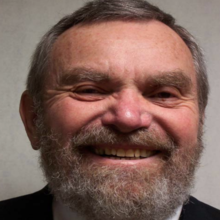
Richard Reid
Richard A. Reid teaches operations research, operations management, and systems thinking at the University of New Mexico. He received a BSME from Case Western Reserve University, and an MBA and Ph.D in Systems Research from Ohio State University.
Dr. Reid enjoys applying conceptual frameworks such as TOC TP to performance improvement opportunities in both the manufacturing and service sectors with students in the classroom and when consulting with organizational managers.
He has written one book, three chapters in other books, and has published over 120 articles in referred national and international journals.

Sherri A. Coleman
Intel Corporation
Jenny Black
Planned Parenthood of New Mexico