

About this Presentation
This presentation is two parts. The first part describes using the TOC thinking processes (TP)to solve a major problem facing most developing countries: a water shortage. The second part describes using TOC thinking processes, the five focusing step, and drum buffer rope in small to medium firms to make them competitive. INWEnt is described as a capacity building international non-profit organization dedicated to developing human resources. They see TOC as a major way of solving big chronic problems internationally that in the past were and are unsolvable with break through thinking. The background of InWEnt and its use of TOC are provided. The traditional approaches to water shortage problems are described and compared to the cost of a TOC solution. Several examples of applications to small business operations are provided. The lotsizing problem is discussed and a current reality tree provided. Before and after results are provided.
What Will You Learn
To help you get the most value from this session, we’ve highlighted a few key points. These takeaways capture the main ideas and practical insights from the presentation, making it easier for you to review, reflect, and apply what you’ve learned.
Why many small and medium-sized companies lose competitiveness not because of globalization alone, but because they are using management rules that quietly create delay, cash strain, and poor flow.
How TOC can help SMEs in developing countries break out of the cost-cutting trap and pursue a very different path to competitiveness — one built on throughput, flow, and faster response to the market.
What really happened when one family-owned appliance manufacturer challenged lot-size thinking, outsourcing logic, and the wrong constraint assumptions — and began turning its performance around with surprisingly modest investment.
Why this session argues that TOC is more than an operations tool: it can become a practical development shortcut for helping enterprises strengthen competitiveness, preserve employment, and improve economic resilience in developing countries.
Instructor(s)
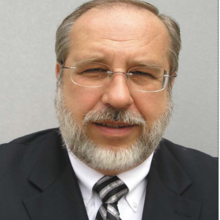
Adolfo Held
After a career in marketing and sales management, Adolfo Held currently works as a consultant and trainer to enhance the performance of private companies and public organizations.
His special field of interest is the dissemination and application of TOC to improve living conditions in developing countries. In close cooperation with InWEnt — an official German capacity building institution — he has been working for many years in development projects in Africa, Asia and Latin America.
He holds a degree in Mechanical Engineering from the University of Applied Sciences and a degree in Welding Engineering from the SLV in Munich, Germany. He graduated as an M.B.A. from Columbia University in New York.
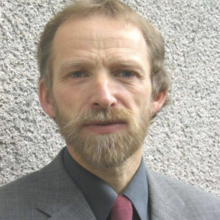
Michael Funcke-Bartz
Michael Funcke-Bartz spent several years in research activities in Latin American cities before joining the former Carl Duisberg Gesellschaft e.V. (CDG) — now InWEnt — as a Senior Project Manager.
He is responsible for designing, implementing and monitoring capacity building programs for professionals and decision-makers in the field of urban development.
In this context he started to introduce TOC as a tool for strategic decision-making for urban infrastructure management in Africa, Asia and Latin America.
He holds a degree in Geography and Spanish from the University of Düsseldorf, Germany, and the Second State Examination as High School Teacher.